Lock Change Cincinnati Questions: Cost, FAQs & Answers
Changing Your Locks in Cincinnati: The Questions Homeowners & Business Owners Ask Us Most
If you’re searching for answers about changing your home or business locks, you’re probably weighing one of a few things: cost, whether you actually need a full lock change or just a rekey, how long it takes, or what’s required for a business after a break-in or a staffing change. Below, Eagle’s Locksmith Cincinnati has answered the questions our customers ask us most often — organized by residential and commercial — so you can make a fast, informed decision.
Residential Lock Change: Common Questions
How do I know if I need to change my locks or just rekey them?
If your existing hardware is in good working condition and you simply want old keys to stop working — after a move-in, a lost key, or a breakup — rekeying is usually the faster, more affordable option. A locksmith adjusts the internal pins so your old keys no longer open the lock, without replacing the hardware itself. Full lock replacement makes more sense when your hardware is worn, damaged, outdated, or you’re upgrading to a higher security grade or a smart lock.
How much does it cost to change locks in Cincinnati?
Nationally, homeowners typically pay in the range of $185–$295 per lock for professional replacement including labor and hardware, or $85–$150 per lock for rekeying. Multiple locks done in the same visit usually cost less per lock than a single lock, since the service call fee is spread across the job. Ask any locksmith you call for an upfront estimate before they start — a trustworthy company will give you a reasonably specific number over the phone.
Should I change my locks when I move into a new house?
Yes. You have no way of knowing how many copies of the old keys exist — previous owners, contractors, real estate agents, and neighbors watching the house may all have one. Rekeying immediately after closing is one of the most affordable security upgrades a new homeowner can make.
How long does it take to change a lock?
A standard rekey or lock replacement typically takes 15–30 minutes per lock for an experienced locksmith. Multiple doors, upgraded hardware, or smart lock installation can extend the visit.
Can I change my locks myself, or should I hire a professional?
Basic knob and deadbolt swaps are a doable DIY project if the new hardware matches your existing door prep. Where professionals earn their fee is in correcting misaligned strike plates, matching keyways across multiple doors under one key, working with high-security or smart locks, and making sure the door remains fully secure and code-compliant when the job is done.
What’s the difference between a Grade 1, 2, and 3 lock?
Locks are rated by ANSI/BHMA on a 1–3 scale. Grade 1 is the highest commercial-level security, Grade 2 is a solid mid-tier residential standard, and Grade 3 is basic builder-grade hardware. A locksmith can recommend the right grade for your entry points based on your specific risk and budget.
Do you install smart locks?
Yes — smart and keyless entry systems are one of the most common upgrade requests we get. They typically run higher than a standard deadbolt due to the electronics, but let you manage access remotely and skip physical keys entirely.
What if I just went through a breakup or a bad living situation and need my locks changed quickly?
This is one of the more common — and more urgent — reasons people call. A same-day rekey or lock change immediately after a breakup, roommate move-out, or eviction is a normal, non-judgmental request, and it’s one of the fastest ways to restore peace of mind.
Commercial Lock Change: Common Questions
How much does it cost to change commercial locks?
Commercial lock replacement typically runs $100–$400 per door depending on the hardware and security level, with high-security or access-control-integrated locks running higher. Because commercial jobs often involve multiple doors, master keying, or access control, it’s worth getting a walkthrough and a written estimate rather than a phone-only quote.
When should a business change its locks?
The most common triggers are: after terminating an employee (especially one with building or master key access), after a break-in or attempted break-in, after a lease turnover or new tenant move-in, after losing track of who holds copies of keys, and as part of a periodic security review — particularly for multi-tenant or high-turnover properties.
What is a master key system, and does my business need one?
A master key system lets different keys open different combinations of doors within a building — for example, a manager’s key opens every office while an employee’s key opens only their own. This is common for offices, retail with stockrooms, and multi-unit commercial properties, and it’s set up by a locksmith at the time of lock installation or rekey.
Can you rekey an entire office after an employee is terminated?
Yes, and this is one of the more time-sensitive commercial requests we handle. A locksmith can rekey all affected entry points — often same-day — so a former employee’s key, badge, or fob no longer works, even if they made an unauthorized copy before leaving.
Do you work with access control or keycard/keypad systems?
Yes. Many commercial properties are moving toward electronic access control, either replacing traditional locks entirely or integrating them alongside mechanical backups. This is worth discussing during a security assessment if you’re managing multiple entry points or want an audit trail of who enters and when.
What’s the difference between residential and commercial lock service?
Commercial jobs more often involve master keying, high-security or restricted keyways (so keys can’t be duplicated at a hardware store), code compliance for fire egress, and coordination across multiple doors or tenants — all things a locksmith experienced in commercial work will account for that a residential-only technician may not.
General Questions About Hiring a Locksmith for a Lock Change
How do I know a locksmith is legitimate and not a scam dispatcher?
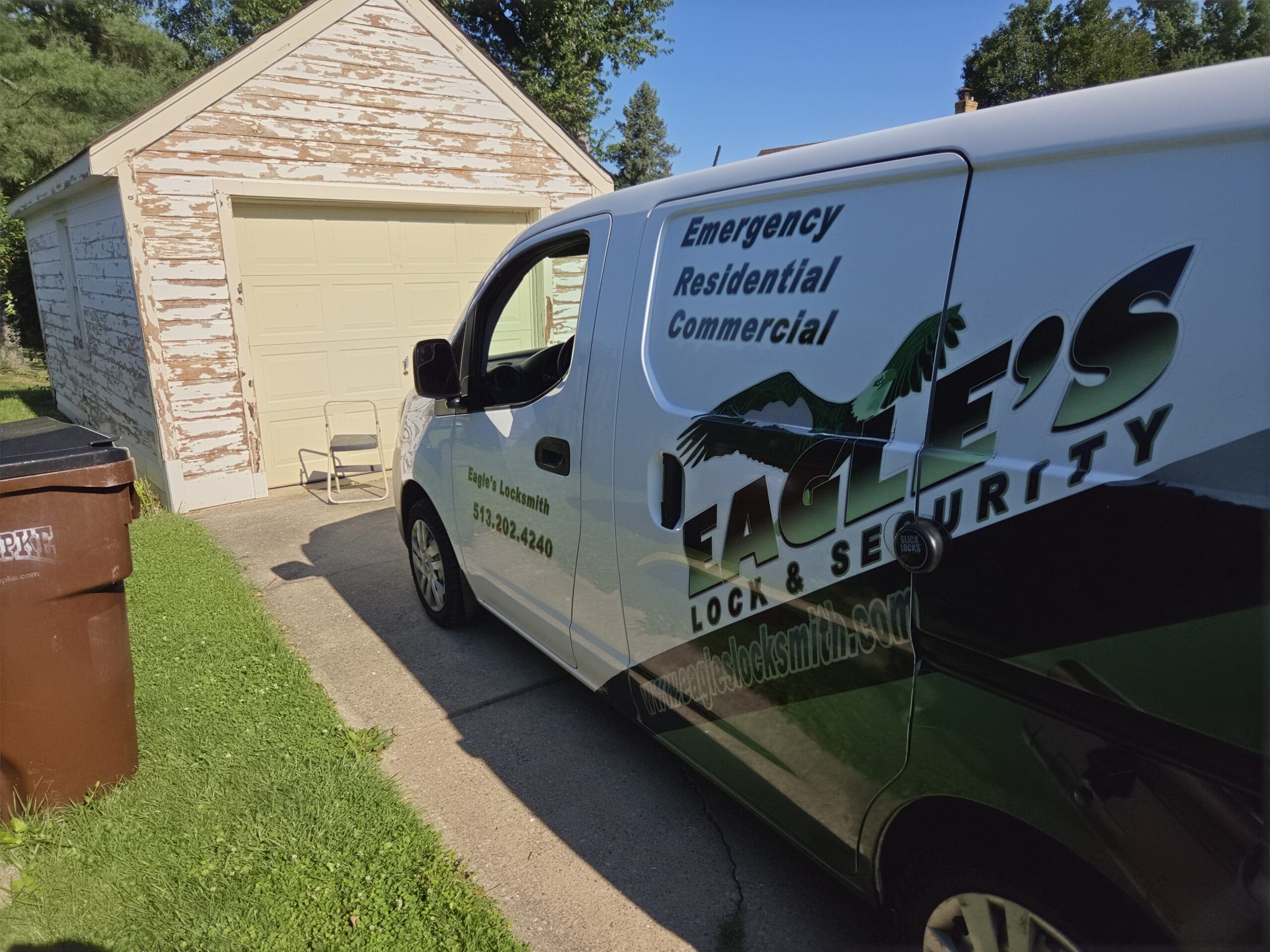
Ask whether they’re licensed, bonded, and insured; whether a technician will arrive in a marked vehicle with ID matching the company name; and whether you’ll get a specific estimate before work begins rather than a vague “it depends” that turns into a high price on-site. A local locksmith with a real local address and a long-standing local reputation is a safer bet than an unfamiliar name that shows up first in a search.
Do you offer free estimates?
Most reputable locksmiths can give you a reasonably specific price range over the phone based on your lock type and the number of doors, then confirm the final number before starting any work.
Is Eagle’s Locksmith licensed, bonded, and insured?
Yes. Eagle’s Locksmith Cincinnati has been family-owned and operating in Greater Cincinnati since 1981, and is fully licensed, bonded, and insured for both residential and commercial work.